El Niño Forecast Signals January Cold Shift Across Southern States as Northeast Could Stay Warmer
A new winter forecast suggests January 2027 could bring a surprising temperature shift across the United States, with parts of the South potentially experiencing colder-than-average conditions while some northern and northeastern regions remain warmer. The developing El Niño pattern could also influence snowfall chances, rainfall and travel conditions across several states, although seasonal projections do not guarantee specific weather events.
Southern States Could See a January Temperature Drop
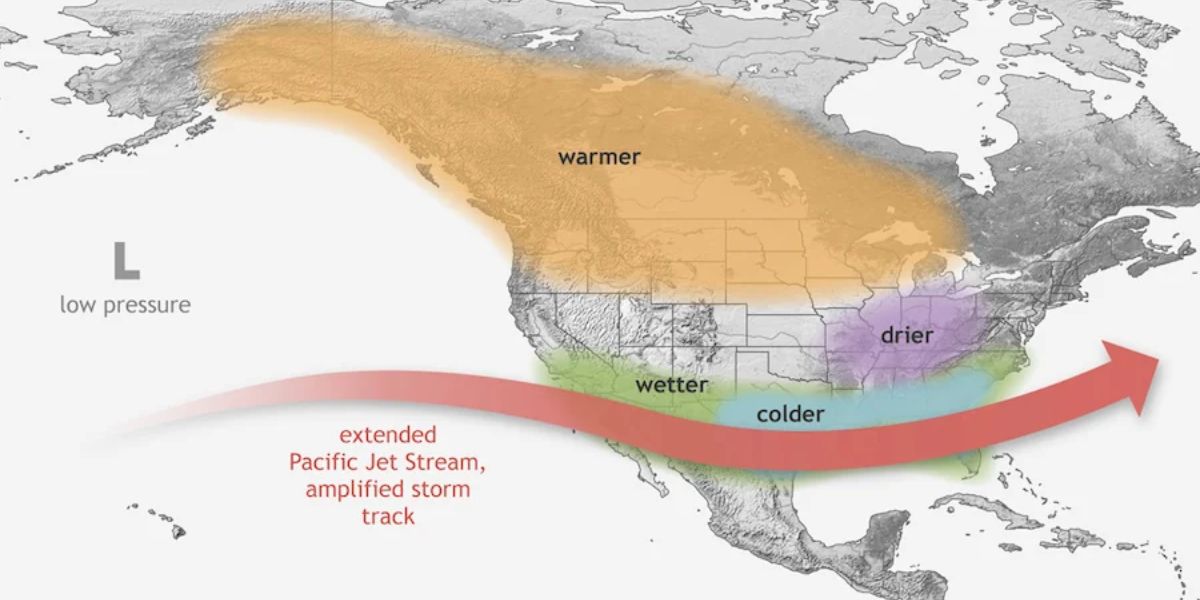
According to a November 23 report from SnowBrains reviewing Direct Weather’s latest forecast, NOAA’s Climate Forecast System (CFS) suggests colder-than-average temperatures could develop across Texas, the southern Great Plains and parts of the Southeast during January.
December may initially bring warmer conditions across much of the northern United States, but January could introduce a different pattern, potentially creating favorable conditions for winter storms in parts of the South when sufficient moisture is present.
January Weather Outlook: Key Forecast Areas
| Region | Potential January Outlook |
|---|---|
| Texas | Colder-than-average temperatures possible |
| Southern Great Plains | Potential temperature drop |
| Southeast | Some areas could experience colder conditions |
| California | Potentially wetter winter pattern |
| Northeast | Some areas may remain unusually warm |
| Pacific Northwest | Snowfall could be affected by precipitation deficits |
These are seasonal projections, not confirmed weather conditions.
Where Snowfall Chances Could Improve
Historical El Niño winter patterns often favor increased snowfall opportunities in California, the southern Rockies and parts of the Mid-Atlantic, according to the SnowBrains analysis.
However, the Pacific Northwest could face a less favorable pattern. SnowBrains reports that the European model projects precipitation deficits of up to six inches across portions of the Cascades through January 2, potentially affecting mountain snowfall.
For travelers planning ski trips, changing regional patterns could influence destination choices, but actual snowfall will depend on shorter-range weather conditions.
NOAA Explains What El Niño Means
The National Weather Service emphasizes that El Niño influences atmospheric circulation rather than directly creating individual storms.
The agency explains:
“El Niño is not a storm.”
El Niño can alter jet-stream patterns and shift the likelihood of certain temperature and precipitation conditions. NOAA’s November 12 Climate Prediction Center update also indicated a strong or very strong El Niño was likely to persist through March.
What Should Travelers and Residents Expect?
- Monitor forecasts: Seasonal predictions cannot confirm individual storms.
- Prepare for temperature changes: Southern states could experience colder January periods.
- Watch snowfall updates: Ski conditions depend on actual precipitation and temperatures.
- Check travel conditions: Winter storms could affect roads and flights if they develop.
January Forecast Remains Uncertain
Although El Niño could bring a colder January pattern across portions of the South, NOAA’s seasonal outlook favors near-average winter temperatures across parts of the Southeast when conditions are averaged over the full season. Short-term cold spells may still occur, but their timing and intensity remain uncertain.
Stay Updated with LifeScienceReport.com
For more weather updates, winter forecasts, breaking news and important developments across the United States, visit LifeScienceReport.com. Stay informed as new forecasts and weather developments emerge.